
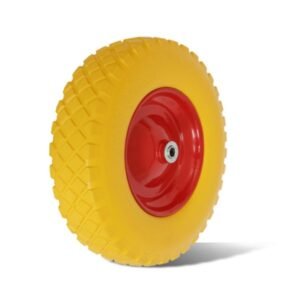
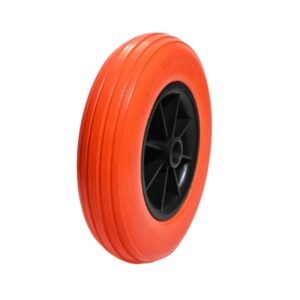
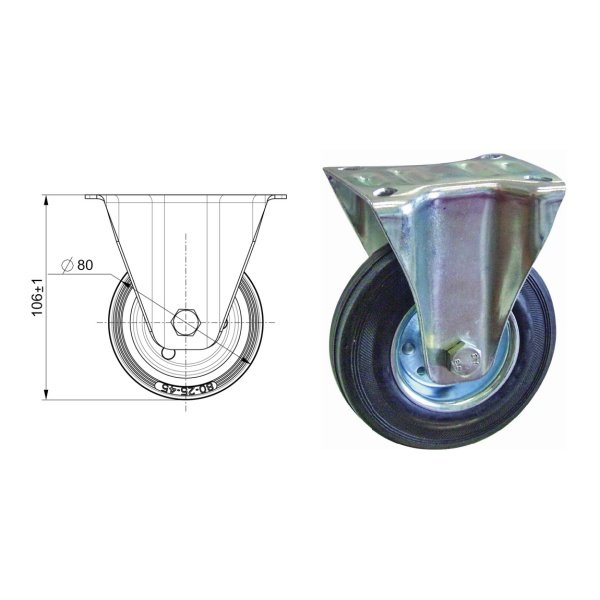
| Material | Description | Applications |
|---|---|---|
| Polyurethane Foam | Durable, versatile, excellent shock absorption and wear resistance | Lawn equipment, industrial carts, medical devices |
| EVA Foam | Lightweight, flexible, good cushioning and resilience | Recreational equipment, strollers, light-duty carts |
| Rubber Foam | High traction, superior shock absorption, durable under varied environmental conditions | Construction equipment, outdoor machinery, sports equipment |
| Composite Foams | Customized properties achieved by blending materials for specific performance requirements | Specialized industrial applications, heavy-duty machinery |
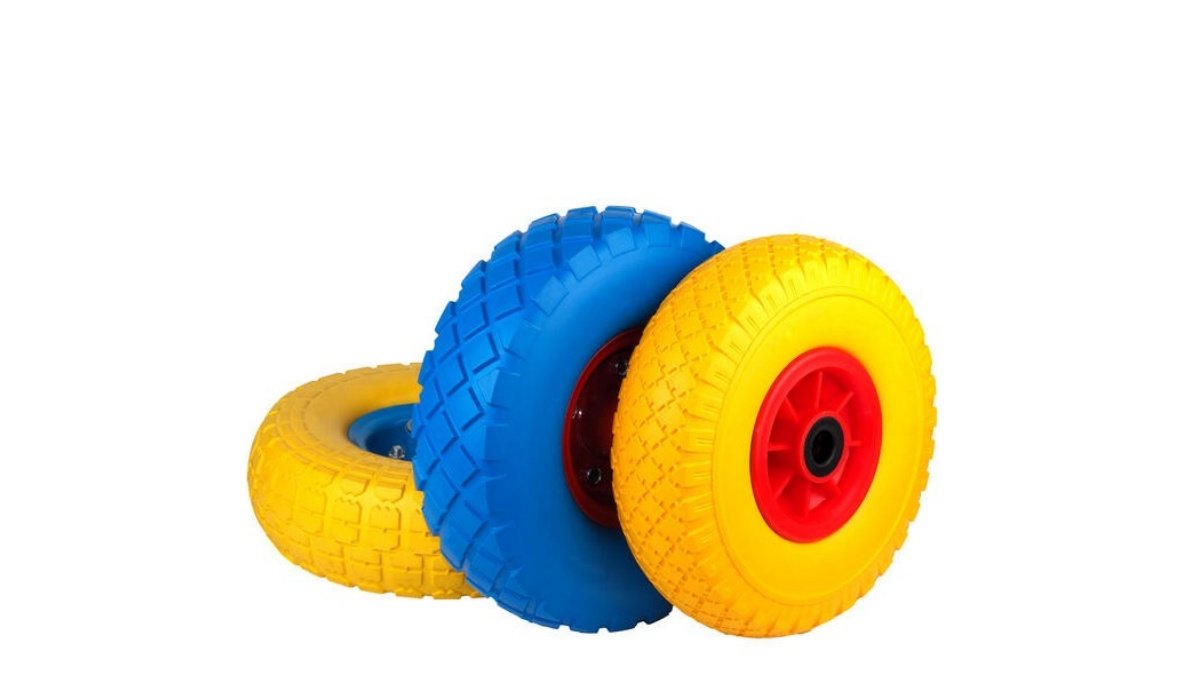
Foam Wheels
Techin proudly stands as a premier manufacturer of high-quality foam wheels, offering over 20 years of expertise in delivering innovative and reliable solutions tailored to diverse industrial needs. Our foam wheels are engineered with precision, utilizing advanced automated production lines to ensure consistent quality, durability, and performance. Committed to excellence, Techin provides customizable options to meet specific requirements across various applications, ensuring timely delivery and exceptional customer support.
Request a Quote for More Details
Get A Quote
Professional Grade
All You Need to Know About Foam Wheels
Foam wheels play a critical role in various industrial applications, offering a combination of lightweight construction, durability, and versatility. These wheels are integral to equipment that requires easy maneuverability without sacrificing strength or performance. Available in different sizes and materials, foam wheels are adaptable to a wide range of environments, from manufacturing plants to retail settings. Selecting the right foam wheel is essential to ensure smooth operations, safety, and efficiency in your business processes.
Key Characteristics
Features of Foam Wheels
Foam wheels are designed to provide superior performance and reliability in various operating conditions. Their unique construction and material properties offer several notable features:
Lightweight Design
Foam wheels are significantly lighter than solid rubber or metal wheels, reducing the overall weight of the equipment and making it easier to handle and move.
Superior Shock Absorption
Engineered to absorb shocks and vibrations, foam wheels protect equipment and loads from damage during transport, making them ideal for sensitive or delicate items.
Durability and Longevity
Made from high-quality foam materials, these wheels are resistant to wear and tear, ensuring a long service life even in demanding environments.
Chemical Resistance
Techin foam wheels are designed to withstand exposure to various chemicals, oils, and solvents, making them suitable for use in industrial settings where these substances are present.
Temperature Resilience
Our foam wheels are built to perform consistently across a wide temperature range, from freezing conditions to intense heat, ensuring reliability in both indoor and outdoor applications.
Versatile Solutions
Applications of Foam Wheels
Due to their advantageous properties, foam wheels find extensive applications across a wide range of industries. Their adaptability and reliability make them a preferred choice for equipment and machinery where performance and maintenance considerations are paramount.
Lawn and Garden Equipment
In the lawn and garden sector, foam wheels are widely utilized for their durability and maintenance-free nature, enhancing the functionality and lifespan of various equipment.
Lawn Mowers:
Foam wheels provide smooth maneuverability and consistent support, resisting punctures from debris and ensuring uninterrupted mowing operations.
Wheelbarrows:
The lightweight and robust construction of foam wheels make them ideal for wheelbarrows, facilitating easy transport of heavy loads over different terrains without the worry of flats.
Garden Carts and Wagons:
Foam wheels ensure stable and effortless movement of carts and wagons, improving efficiency in transporting tools, plants, and materials around gardens and nurseries.
Spreaders and Sprayers:
Reliable and maintenance-free foam wheels enhance the performance of spreaders and sprayers, ensuring consistent application and ease of use.

Industrial and Material Handling Equipment
In industrial contexts, foam wheels offer robust performance and reliability, enhancing the efficiency and safety of material handling operations.
Hand Trucks and Dollies:
Foam wheels provide dependable support and easy maneuverability for transporting heavy goods, reducing worker fatigue and improving productivity.
Platform Carts:
The durable construction of foam wheels ensures consistent performance under heavy loads, facilitating smooth and secure movement of materials within warehouses and factories.
Portable Machinery:
Industrial machines equipped with foam wheels benefit from enhanced mobility and reduced vibration, contributing to operational flexibility and equipment longevity.
Construction Equipment:
Foam wheels withstand harsh environmental conditions and rough terrains commonly encountered in construction sites, ensuring reliable performance and reduced downtime.

Recreational and Sports Equipment
Foam wheels are also prevalent in various recreational and sports applications, where comfort and durability are essential.
Bicycles and Scooters:
Foam wheels offer a maintenance-free alternative to traditional tires, providing consistent performance and reducing the risk of punctures during recreational activities.
Strollers and Joggers:
Parents and athletes benefit from the smooth and cushioned ride provided by foam wheels, enhancing comfort and safety during use.
Skateboards and Rollerblades:
The shock-absorbing qualities of foam wheels contribute to better control and a smoother experience in various skating activities.
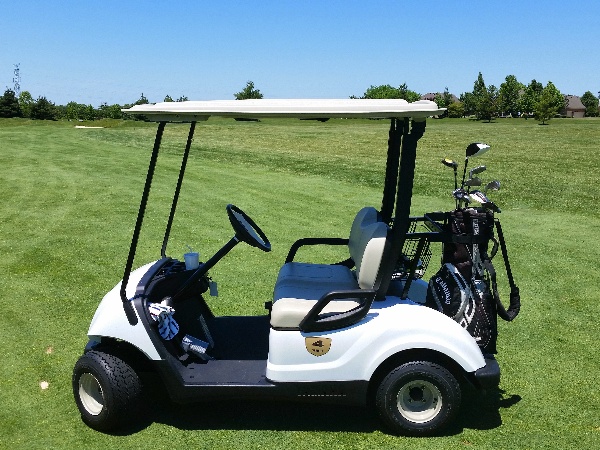
Golf Carts and Trolleys:
Foam wheels ensure quiet and effortless movement across golf courses, resisting damage from terrain irregularities and reducing maintenance needs.
Core Value
Advantages of Foam Wheels
Investing in foam wheels brings numerous benefits that enhance operational efficiency, safety, and cost-effectiveness across various applications.
Maintenance-Free Operation
Foam wheels eliminate the need for regular inflation checks and repairs associated with pneumatic tires, reducing downtime and maintenance costs.
Enhanced Safety
The puncture-proof nature of foam wheels prevents sudden flats that can lead to accidents, ensuring consistent and safe performance.
Improved Comfort
Excellent shock absorption properties provide smoother rides and reduce vibrations, enhancing user comfort and protecting sensitive cargo or equipment.
Cost-Effective
The durable construction and long service life of foam wheels translate into lower replacement frequencies and overall cost savings over time.
Environmental Resilience
Foam wheels perform reliably in various weather conditions and terrains, maintaining functionality and integrity in diverse environments.
Customizability
Available in a range of sizes, densities, and tread patterns, foam wheels can be tailored to meet specific performance requirements and aesthetic preferences.
Noise Reduction
The soft composition of foam helps in minimizing operational noise, making them suitable for environments where quiet operation is desired.
Material Science
Common Materials for Foam Wheels
The performance and suitability of foam wheels are significantly influenced by the materials used in their construction. Understanding the properties of these materials aids in selecting the appropriate wheel for specific applications.
Polyurethane Foam
The most commonly used material for foam wheels, polyurethane offers an excellent balance of durability, flexibility, and shock absorption. It resists wear, chemicals, and environmental factors, making it suitable for a wide range of applications.
EVA (Ethylene-Vinyl Acetate) Foam
EVA foam provides lightweight and flexible characteristics with good cushioning properties. It is ideal for applications where weight reduction and comfort are primary considerations, such as in recreational equipment.
Rubber Foam
Rubber-based foam offers superior grip and traction, along with excellent shock absorption. It is well-suited for outdoor and industrial applications where enhanced durability and performance on varied terrains are required.
Composite Foams
Combining different foam materials can result in wheels with specialized properties tailored for specific needs, such as increased load capacity, improved resilience, or enhanced temperature resistance.
Compliance & Quality
Standards and Certifications for Foam Wheels
Adhering to recognized standards and obtaining relevant certifications is essential to ensure foam wheels meet quality, safety, and environmental requirements. Compliance with these standards demonstrates a commitment to excellence and builds customer trust.
| Standard/Certification | Description | Function Tested | Qualification Criteria | Testing Methods |
|---|---|---|---|---|
| ISO 9001 | International standard for quality management systems, ensuring consistent product quality and continuous improvement | Manufacturing processes, quality control, documentation | Compliance with all requirements outlined in ISO 9001 standard | Audits, process evaluations, documentation reviews |
| REACH | Addresses the production and use of chemical substances and their potential impacts on human health and the environment | Chemical composition and safety assessment | Compliance with REACH Annex XVII and authorization list requirements | High-performance liquid chromatography (HPLC), safety data sheet (SDS) review |
| RoHS | Restricts the use of specific hazardous materials found in electrical and electronic products | Presence of hazardous substances (e.g., lead, mercury, cadmium) | Concentration of restricted substances must be below 0.1% (1000 ppm) except cadmium, which must be below 0.01% (100 ppm) | X-ray fluorescence (XRF) spectroscopy, inductively coupled plasma mass spectrometry (ICP-MS) |
| ASTM F1952 | Standard safety specification for components used in recreational equipment | Impact resistance, durability, performance | Components must meet specified performance and safety criteria | Mechanical testing, impact assessments, performance evaluations |
| EN 12527 | European standard specifying requirements for wheels and castors used in manually propelled institutional equipment | Load capacity, durability, rolling resistance | Wheels must support specified loads and pass endurance and performance tests | Load testing, endurance testing, resistance measurements |
Buying Guide
Guiding Principles for Selecting Foam Wheels
Selecting the appropriate foam wheel involves careful consideration of various factors to ensure optimal performance, safety, and longevity in the intended application.
01
Determine Application Requirements
Load Capacity
Assess the maximum weight the wheel needs to support, including dynamic loads during operation. Choose a wheel rated appropriately to prevent deformation and ensure durability.
Terrain and Surface Conditions
Consider the typical surfaces and environmental conditions where the wheel will be used. Select materials and tread patterns that provide suitable traction and resilience for smooth or rough terrains, indoor or outdoor use.
Speed of Operation
Identify the operational speed requirements. For high-speed applications, ensure the wheel's construction and balance can handle increased rotational forces without compromising performance.
Environmental Factors
Evaluate exposure to elements such as moisture, chemicals, extreme temperatures, and UV radiation. Choose materials resistant to these factors to maintain performance and extend service life.
02
Select Appropriate Wheel Dimensions
Wheel Diameter and Width
Larger diameters facilitate easier movement over obstacles and rough surfaces, while appropriate width ensures stability and load distribution. Select dimensions that balance maneuverability and support based on application needs.
Hub and Bearing Configuration
Choose suitable hub materials (plastic or metal) and bearing types (ball bearings, plain bearings) that match load requirements, desired smoothness of operation, and environmental conditions.
Tread Pattern
Select from various tread designs (ribbed, knobby, smooth) to provide optimal traction, handling, and surface interaction tailored to specific usage scenarios.
Mounting Compatibility
Ensure the wheel's axle size and mounting configurations are compatible with the equipment or device for seamless integration and secure attachment.
03
Consider Maintenance and Longevity
Durability
Opt for high-quality materials and construction techniques that offer resistance to wear and tear, reducing the need for frequent replacements and lowering long-term costs.
Maintenance Requirements
Prefer maintenance-free designs that minimize upkeep efforts, especially in applications where regular maintenance is impractical or costly.
Replacement Availability
Choose wheels from reputable manufacturers that offer consistent product availability and support for easy replacement and servicing when necessary.
04
Evaluate Cost-Effectiveness
Budget Constraints
Balance performance requirements with budget considerations by selecting wheels that meet essential specifications without unnecessary features that add cost.
Lifecycle Costs
Consider the total cost of ownership, including initial purchase price, maintenance expenses, and expected lifespan, to make informed decisions that provide long-term value.
Customization Needs
Assess whether standard products meet requirements or if custom solutions are necessary, weighing the benefits against potential additional costs and lead times.
Need Expert Guidance?
Our technical team can help you select the perfect foam wheel solution for your specific requirements.
Contact Our Engineers
Questions/Answers
Frequently Asked Questions
To continue to provide valuable information for our B2B clients, here are the most common questions about foam wheels.
Do you offer free samples? +
Yes, we offer product samples to give you a firsthand experience of the quality and variety we bring to the table. Our sample service helps you evaluate our casters before making bulk orders.
Do you have any certifications? +
Certainly, our products proudly bear recognizable certifications like EN840, REACH, RoHS, PAHs, EN12530 etc. These symbols of excellence guarantee that you receive products that meet international standards and European regulations.
Is there a warranty period for your products? +
All of our products come with a standard warranty period, reinforcing our commitment to quality and customer satisfaction. We stand behind our manufacturing excellence with comprehensive warranty coverage.
How do you ensure timely delivery of orders? +
We have a streamlined production schedule and robust logistics partnerships to ensure that your orders are delivered on time, every time. Our 20 years of European market experience ensures efficient logistics solutions.
Is it OK to print my logo on casters? +
Sure. We could build the molds and fixtures upon your sample or technical drawings, add your logo on fork or wheel, and pack the casters in your branded carton. Custom branding solutions are part of our comprehensive service offering.
Direct Inquiry
Any Questions? Contact Us!
Get expert advice on foam wheels and casters from our technical team.
